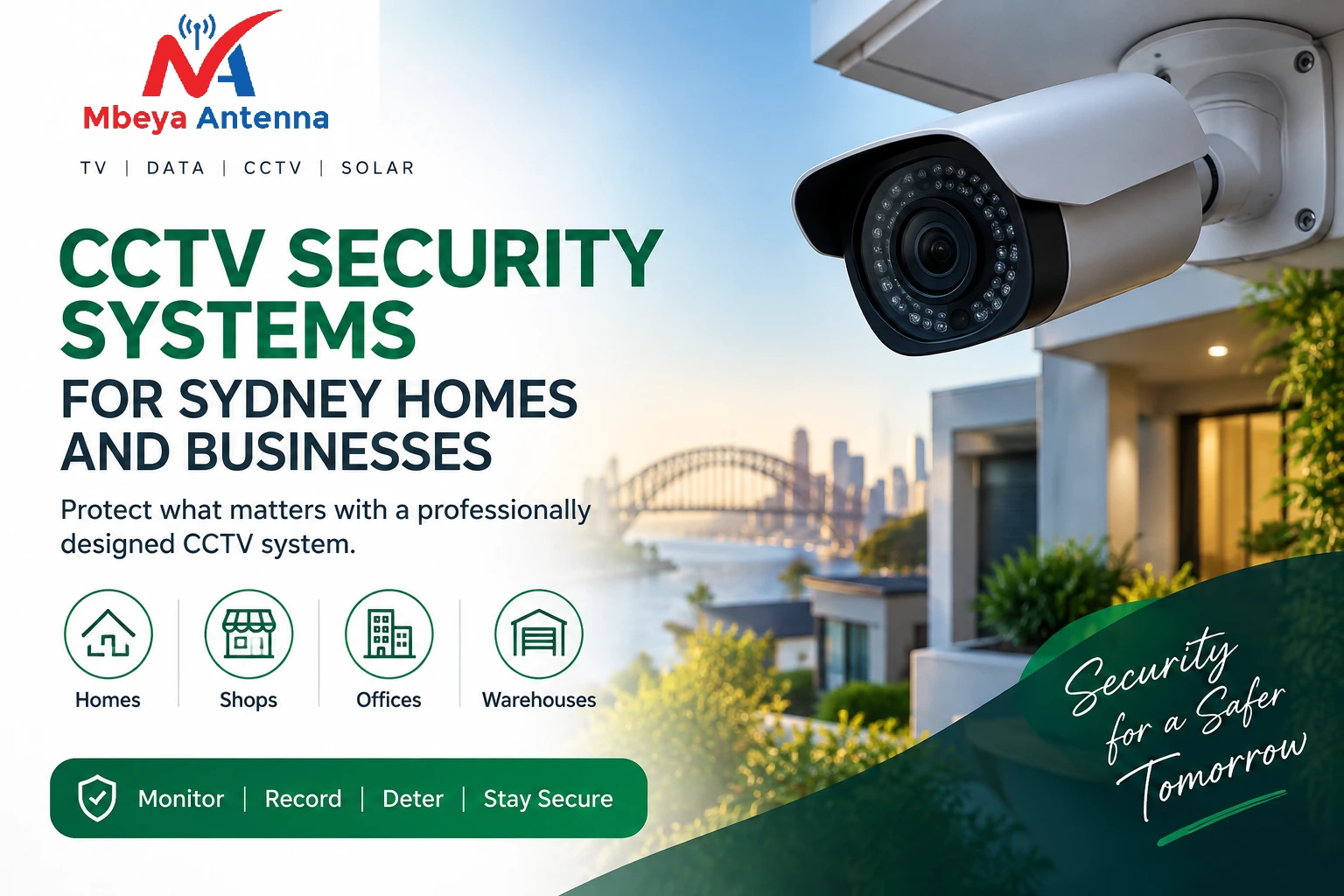
Security cameras have become an important part of protecting homes, offices, shops, warehouses and other properties across Sydney. A properly designed CCTV system can help you monitor important areas, record activity and improve visibility around your property. But buying a few cameras and pointing them at the building is not always enough. Camera type, positioning, lighting, recording, connectivity and ongoing reliability all affect how useful your security system will be.
Mbeya Antennas provides CCTV security systems in Sydney and surrounding areas for residential and commercial properties. Our approach starts with understanding the property and the areas you want to protect before recommending a practical solution. Whether you need a new CCTV installation, additional cameras or an upgrade to an existing system, we can help you choose and install equipment suited to the site.
Looking for Professional Mobile Signal Boosting in Sydney for Better Indoor Reception?
A good CCTV system should work as part of your wider security strategy rather than operate as an isolated device. Cameras can provide visual verification, while alarms can detect unauthorised entry and alert you to potential incidents. For businesses, surveillance can also help monitor entrances, customer areas, stockrooms, loading zones, parking areas and other important parts of the premises.
Why CCTV Matters for Sydney Properties
Every property has different security requirements. A suburban house may need cameras covering the front entrance, driveway, garage and backyard, while a retail store may require coverage of entrances, point-of-sale areas, aisles, storage rooms and external access points. A warehouse or commercial site can require a completely different approach because of its size, vehicle movement, multiple access points and operating hours.
This is why CCTV should be planned around the property rather than selected purely by camera price. A camera with excellent specifications will not provide useful footage if it is installed in the wrong location or aimed toward glare. Similarly, a system with plenty of cameras can still leave important blind spots if the installation has not been properly planned.
For Sydney properties, outdoor equipment also needs to be selected and positioned with local conditions in mind. Direct sunlight, rain, heat and exposure to the elements can affect equipment and image quality. A professional installation considers these practical details before cameras and cabling are installed.
CCTV Security Systems We Install
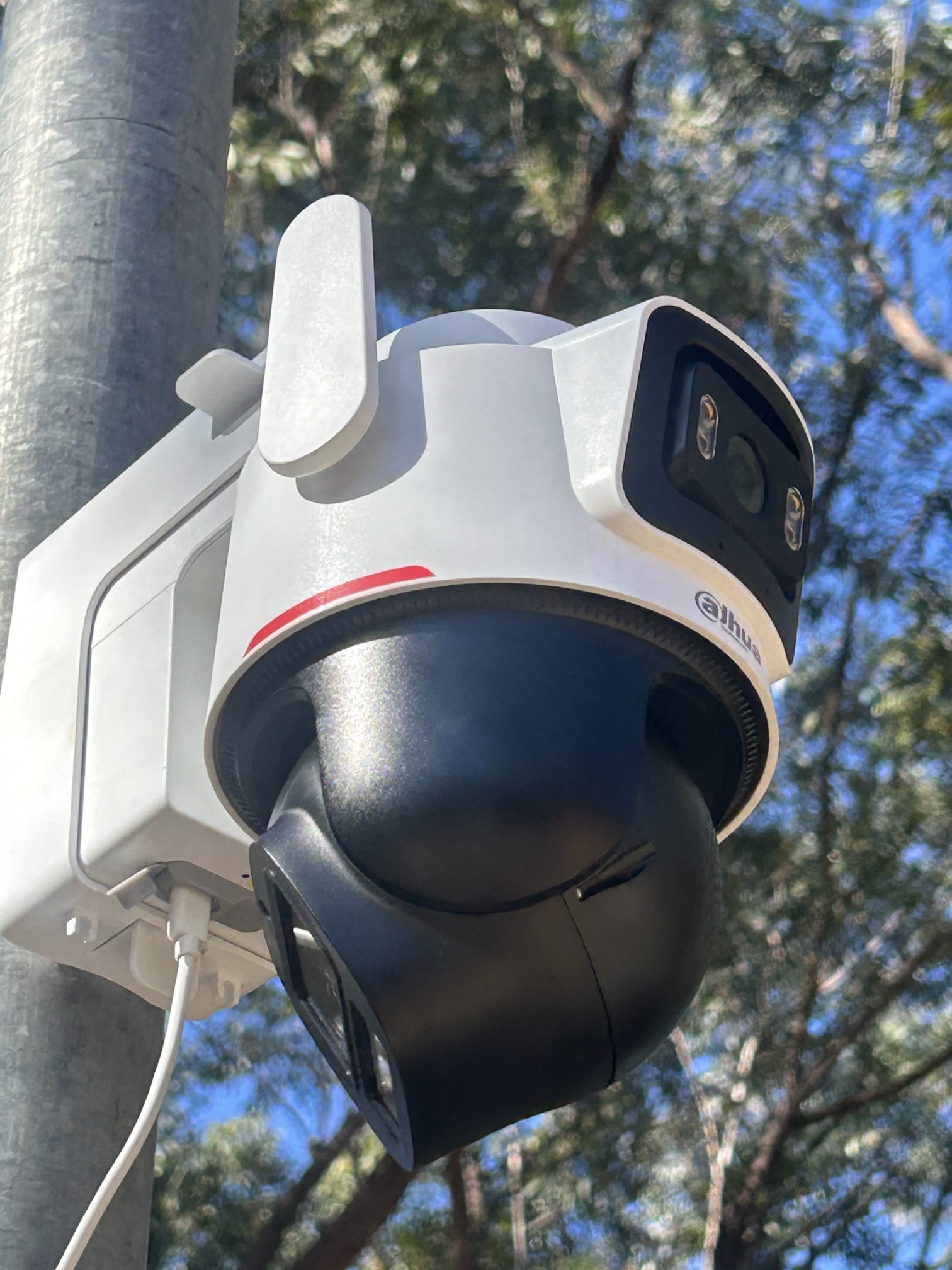
Mbeya Antennas can help with CCTV solutions for different property types and security requirements. The right system depends on the size of the property, the number of areas requiring coverage, available network infrastructure, recording requirements and whether remote monitoring is required.
Rather than treating every installation as the same, the system can be configured around the areas that matter most to you. This can include entrances, driveways, garages, side paths, backyards, car parks, commercial entrances, stock areas and other vulnerable locations.
Indoor and Outdoor Security Cameras
Indoor and outdoor cameras have different installation requirements. Indoor cameras can be used to monitor entrances, hallways, offices, reception areas, retail spaces and other internal locations. Outdoor cameras need suitable positioning and protection from weather while maintaining a useful viewing angle.
Different camera designs can also serve different purposes. Dome-style cameras can provide a relatively discreet option for indoor or covered areas, while bullet-style cameras can provide visible surveillance around external areas. Turret cameras are another practical choice for many residential and commercial installations because their positioning can be adjusted to suit the required viewing area.
The objective is not to install the same camera everywhere. It is to select the right security camera for each location so that the complete system provides useful coverage without unnecessary equipment.
IP CCTV and Network Cameras
Modern IP CCTV systems use network connectivity to transmit video between cameras and recording equipment. This provides flexibility when designing a multi-camera security system and can support features such as high-resolution video, remote viewing and smart detection, depending on the equipment selected.
IP cameras can be particularly useful for businesses that already have suitable network infrastructure. However, the network needs to be planned properly. Cabling, switches, power requirements and bandwidth can all influence system performance.
A professional installation helps ensure that cameras are connected correctly and that the recording system can reliably receive footage from the installed devices. For larger properties, this planning becomes even more important because multiple cameras may operate continuously.
CCTV Recording and Remote Viewing
Recording is one of the most important parts of a CCTV system. A camera that shows live video but does not retain useful footage may not provide the level of security a property owner expects.
Depending on the system, recordings can be stored using a dedicated recorder such as an NVR, with storage capacity selected according to the number of cameras, recording quality, recording schedule and retention requirements. Motion-based recording can also be considered where appropriate.
Remote viewing can provide another layer of convenience. When configured correctly, property owners can check cameras through a compatible mobile application or other remote interface. This can be useful when you are away from home, managing a business remotely or simply want to check what is happening around the property.
Choosing the Right CCTV System
There is no single CCTV system that is automatically the best choice for every Sydney property. The right solution depends on what you want the cameras to achieve.
Start by asking a simple question: What do you actually need to see?
If your priority is knowing who is approaching your front door, the camera needs to provide a suitable view of the entrance. If you need to monitor vehicles entering a driveway, the camera needs to be positioned and selected for that purpose. If you operate a warehouse, the system may need to cover large areas while also providing detailed footage at specific access points.
This approach prevents you from spending money on features that do not provide practical value.
Wired vs Wireless CCTV
Both wired and wireless CCTV systems can be useful, but they solve different installation challenges. Wired systems are generally well suited to permanent installations where reliable connectivity and continuous operation are priorities. They are particularly practical for larger systems with multiple cameras.
Wireless cameras can provide flexibility where running cable is difficult. They may be useful for particular areas, detached structures or situations where extensive cabling would be impractical. However, wireless performance depends on network coverage, interference, power availability and the specific equipment being used.
For a permanent multi-camera installation, a properly planned wired system can provide a dependable foundation. For smaller or difficult-to-cable areas, wireless equipment may provide a useful alternative.
The important point is not to choose wireless simply because it sounds easier. The property should determine the technology.
Camera Resolution and Night Vision
Resolution affects how much detail a camera can capture. Higher-resolution cameras can provide clearer images, but resolution alone does not guarantee useful footage.
Lens selection, camera positioning, lighting, distance and image processing also matter. A high-resolution camera aimed at a poorly lit area may not produce the identification detail you expect.
Night performance is equally important because security incidents do not only happen during daylight hours. Outdoor cameras should be selected according to the available lighting and the distance that needs to be monitored.
Features such as infrared night vision, low-light performance and smart illumination can improve visibility after dark. During installation, cameras should also be tested in realistic lighting conditions rather than assuming that daytime performance represents the entire system.
CCTV Camera Placement in Sydney
Camera placement is one of the biggest factors separating a useful CCTV installation from a poorly planned one. Even expensive cameras can leave security gaps if they are mounted too high, pointed toward bright light or positioned without considering how people and vehicles move around the property.
The installation should focus on entry points, vulnerable areas and useful viewing angles. It should also avoid unnecessary coverage that creates privacy concerns or wastes recording capacity.
Residential Camera Placement
For a typical Sydney home, important areas may include the front door, driveway, garage, side access, backyard and rear doors. These areas can provide visibility around common approaches to the property.
The front entrance is particularly useful because it can provide footage of visitors and activity around the main access point. A driveway camera can help monitor vehicles and movement, while cameras covering side gates and rear access can reduce blind spots around less visible parts of the property.
Camera height also matters. Mounting a camera too low can make it easier to interfere with, while positioning it too high may reduce useful facial detail. The ideal position depends on the camera lens, property layout and the area being monitored.
A professional assessment can help balance coverage, visibility and physical security.
Commercial CCTV Camera Placement
Commercial properties often require more structured CCTV planning. A shop may need coverage around entrances, customer areas, registers and stockrooms, while an office may prioritise reception, entrances, corridors and restricted areas.
Warehouses and industrial sites can require coverage of loading docks, vehicle access, perimeter areas and storage locations. Construction sites may have different requirements again, particularly where equipment and materials are stored outside.
For commercial CCTV, it is useful to separate the property into security zones. Each zone can then be assessed for the type of camera, viewing distance, lighting, recording requirement and potential blind spots.
This approach produces a more organised surveillance system and makes future expansion easier.
Professional CCTV Installation Sydney
Installing CCTV involves more than drilling holes and connecting cameras. A professional installation should consider camera locations, cable routes, network connectivity, recording equipment, power, weather exposure and future maintenance.
Mbeya Antennas provides CCTV installation for Sydney and surrounding suburbs, with solutions designed around the property rather than a one-size-fits-all package.
Our technicians can assess the areas requiring coverage and help determine an appropriate system. The aim is to leave you with equipment that is correctly positioned, connected and ready to use.
Our CCTV Installation Process
A successful CCTV installation starts with understanding the property. We consider the areas you want to monitor, existing infrastructure, access points, lighting and any specific security concerns.
The installation process can include:
- Property and security assessment to identify important areas and potential blind spots.
- Camera selection based on location, viewing distance, lighting and required features.
- Camera positioning to achieve useful coverage while reducing unnecessary overlap.
- Cable and network planning for reliable communication between cameras and recording equipment.
- Secure installation of cameras, recording equipment and associated hardware.
- System configuration including recording and relevant remote-access functions.
- Testing of cameras during available lighting conditions to confirm coverage and image quality.
The final step should never be overlooked. Each camera needs to be checked from the perspective of what you actually want to see.
CCTV Upgrades and Replacement
You do not always need to replace an entire CCTV system when something becomes outdated. Depending on the existing equipment, it may be possible to upgrade selected cameras, recording hardware, storage or network components.
An upgrade can be useful when older cameras provide poor night images, the recording system has limited capacity, remote viewing is outdated or additional areas need to be covered.
However, compatibility matters. Existing cameras, recorders and network equipment may not always work together as expected. A professional assessment can help determine whether upgrading individual components makes sense or whether a complete replacement would provide better long-term value.
Commercial CCTV Security Systems
Businesses have different security priorities from residential properties. A commercial CCTV system may need to operate continuously, cover multiple entrances and provide footage across large or complex premises.
Our commercial CCTV security systems can be planned for shops, offices, warehouses and other business environments in Sydney and surrounding areas. The installation can focus on the areas that matter most to your operations, including entrances, customer spaces, storage areas, staff-only zones, vehicle areas and external access points.
A commercial CCTV system can also support incident investigation. If a theft, property damage or unauthorised access event occurs, recorded footage can help establish what happened and when it occurred.
CCTV for Shops, Offices and Commercial Sites
Retail businesses can use CCTV to monitor entrances, sales areas, stockrooms and other important zones. Offices may require surveillance around entrances, reception areas, server or equipment rooms and restricted-access locations.
For warehouses and larger commercial sites, the challenge is often coverage. A small number of cameras positioned strategically may cover critical areas, while additional cameras may be required around perimeter or loading zones.
The system should be designed around your operating environment. A camera that works well inside an office may not be the right choice for an outdoor loading area.
This is where professional planning adds value: the goal is useful security coverage, not simply a higher camera count.
Commercial Alarm Systems and CCTV Integration
CCTV and alarms perform different functions, and combining them can create a stronger security setup. Cameras provide visual information, while an alarm system can detect events such as unauthorised entry through doors, windows or designated areas.
Mbeya Antennas also provides commercial alarm systems for businesses that require intrusion detection alongside video surveillance.
Integrating CCTV and alarms can make it easier to understand what triggered a security event. Instead of receiving an alarm notification without knowing what happened, CCTV may provide visual information that helps verify activity around the property.
Combining Cameras and Intrusion Detection
A combined security system can be useful for businesses that want multiple layers of protection. For example, an alarm may detect an unauthorised door opening while a nearby CCTV camera records the surrounding area.
Alarm systems can be designed using different detection devices and can include wired or wireless components depending on the property. The appropriate solution depends on the building, access points and security requirements.
Mbeya Antennas’ existing security offering includes both alarm systems and CCTV, allowing these technologies to be considered together rather than as completely separate installations.
For a business owner, this can simplify the security planning process. Instead of trying to coordinate unrelated systems, you can discuss your CCTV and alarm requirements as part of one broader security strategy.
CCTV Privacy and Responsible Installation
CCTV should be installed responsibly. The objective is to protect your property without unnecessarily recording private areas that are outside your legitimate security requirements.
Camera angles should therefore be planned carefully. Avoid directing cameras toward areas where people have a reasonable expectation of privacy, and consider how neighbouring properties may appear within the camera’s field of view.
Audio recording also deserves particular attention because rules around audio can differ from video surveillance requirements. If your cameras include microphones, make sure the feature is appropriate for your intended use and complies with applicable Australian and NSW requirements.
For commercial properties, businesses should also consider appropriate policies, signage and access controls for recorded footage.
A professional installer can help identify practical privacy considerations during the planning stage, but property owners and businesses remain responsible for using surveillance systems appropriately.
Why Choose Mbeya Antennas
Choosing a CCTV installer is about more than buying cameras. The quality of the installation, cable work, camera positioning, configuration and after-installation support can affect the system for years.
Mbeya Antennas is a family-owned business with more than 15 years of combined experience and provides services across Sydney and surrounding regions. The business states that its technicians are qualified, licensed and insured, with ACMA cabling licensing for applicable telecommunications work.
The existing security service offering includes CCTV installation, alarm systems, business security, home security, video intercom and access control, and smart security solutions.
We also provide free quotes for residential and commercial customers. This gives you an opportunity to discuss your property, security priorities and installation requirements before deciding on the most suitable solution.
Most importantly, the installation should be practical. The system needs to be positioned properly, easy to use and suitable for the property rather than overloaded with unnecessary features.
CCTV Security Systems Across Sydney
Mbeya Antennas services Sydney and surrounding suburbs, providing security, antenna, data and telecommunications solutions for residential and commercial customers.
If you are upgrading an existing CCTV system, building a new home security setup or securing a commercial property, the first step is to identify the areas that require protection. From there, camera types, recording requirements, cabling and additional security technologies can be considered.
Our broader service range also includes antenna installation, TV services, satellite installation and data services. This means CCTV and security installations can be considered alongside other cabling and technology requirements where appropriate.
For businesses, we can also discuss commercial CCTV and alarm requirements as part of a wider property security setup.
If you are unsure how many cameras you need or which type is appropriate, you do not have to work it out alone. A site assessment can help turn a general security concern into a practical installation plan.
Frequently Asked Questions
How much does CCTV installation cost?
The cost of CCTV installation depends on the number of cameras, camera type, resolution, recording requirements, cable length, property layout and installation complexity. A small residential system will normally have very different requirements from a multi-camera commercial installation. Rather than relying on a generic price, it is better to assess the property and determine the equipment and installation work required. Mbeya Antennas can provide a quote based on your specific CCTV requirements.
How many cameras does a property need?
There is no fixed number of cameras that suits every property. A smaller home may need cameras covering the front entrance, driveway, rear access and backyard, while a larger property may require additional cameras for side paths, garages and other vulnerable areas. Commercial properties can require significantly more coverage depending on their layout and operations. The goal should be to cover important areas effectively rather than simply installing as many cameras as possible.
Can CCTV be viewed remotely?
Many modern CCTV systems support remote viewing through a compatible smartphone application or other remote-access platform. Whether remote viewing is available depends on the cameras, recorder, network connection and system configuration. A professional installation can configure the appropriate equipment and help ensure the system is connected correctly. Remote access should also be secured using strong account credentials and appropriate security settings.
Is wired CCTV better than wireless CCTV?
Neither option is automatically better for every property. Wired CCTV is often suitable for permanent installations where stable connectivity and continuous operation are important. Wireless CCTV can provide flexibility in areas where running cable is difficult. The best choice depends on the building, network conditions, power availability, number of cameras and installation requirements.
Can CCTV and alarm systems work together?
Yes. CCTV and alarm systems can complement each other by providing different types of security information. An alarm can detect a potential intrusion, while CCTV can provide visual information about activity around the property. Combining the two can be particularly useful for businesses and properties requiring layered security. The exact integration available depends on the equipment and system configuration.
Do I need CCTV for my business?
CCTV can be useful for businesses that need to monitor entrances, stock, staff-only areas, customer spaces, vehicles, equipment or external areas. The value depends on the nature of the business and its security risks. A properly planned system can provide visibility and recorded evidence when incidents occur. Commercial CCTV can also be combined with alarm systems and other access-control technologies.
Can old CCTV systems be upgraded?
In many cases, parts of an existing CCTV system can be upgraded instead of replacing everything. However, compatibility between cameras, recorders, cabling and network equipment needs to be checked first. If the existing system is significantly outdated, replacing the complete system may provide better performance and easier maintenance. An assessment can help determine the most practical option.
Where should outdoor CCTV cameras be installed?
Outdoor cameras should generally focus on important access and activity areas such as entrances, driveways, garages, gates, side paths and rear access points. The camera should be positioned to provide a useful view without unnecessary glare, obstruction or privacy issues. Height, viewing angle and lighting all affect the final result. Professional installation can help reduce blind spots and improve coverage.
Conclusion
A CCTV system is only as useful as the planning behind it. The right cameras, recording equipment and technology need to be matched with the property, lighting, access points and security objectives. Whether you are protecting a Sydney home, retail business, office, warehouse or another commercial property, careful camera placement and reliable installation can make a significant difference.
Mbeya Antennas provides CCTV security systems in Sydney and surrounding areas, including residential CCTV, commercial CCTV, CCTV upgrades and security solutions that can work alongside alarm systems. Our approach is focused on practical installation, appropriate equipment and coverage that makes sense for the property.
If you are considering CCTV installation, upgrading an existing surveillance system or combining CCTV with a commercial alarm system, contact Mbeya Antennas to discuss your requirements and request a quote.